01
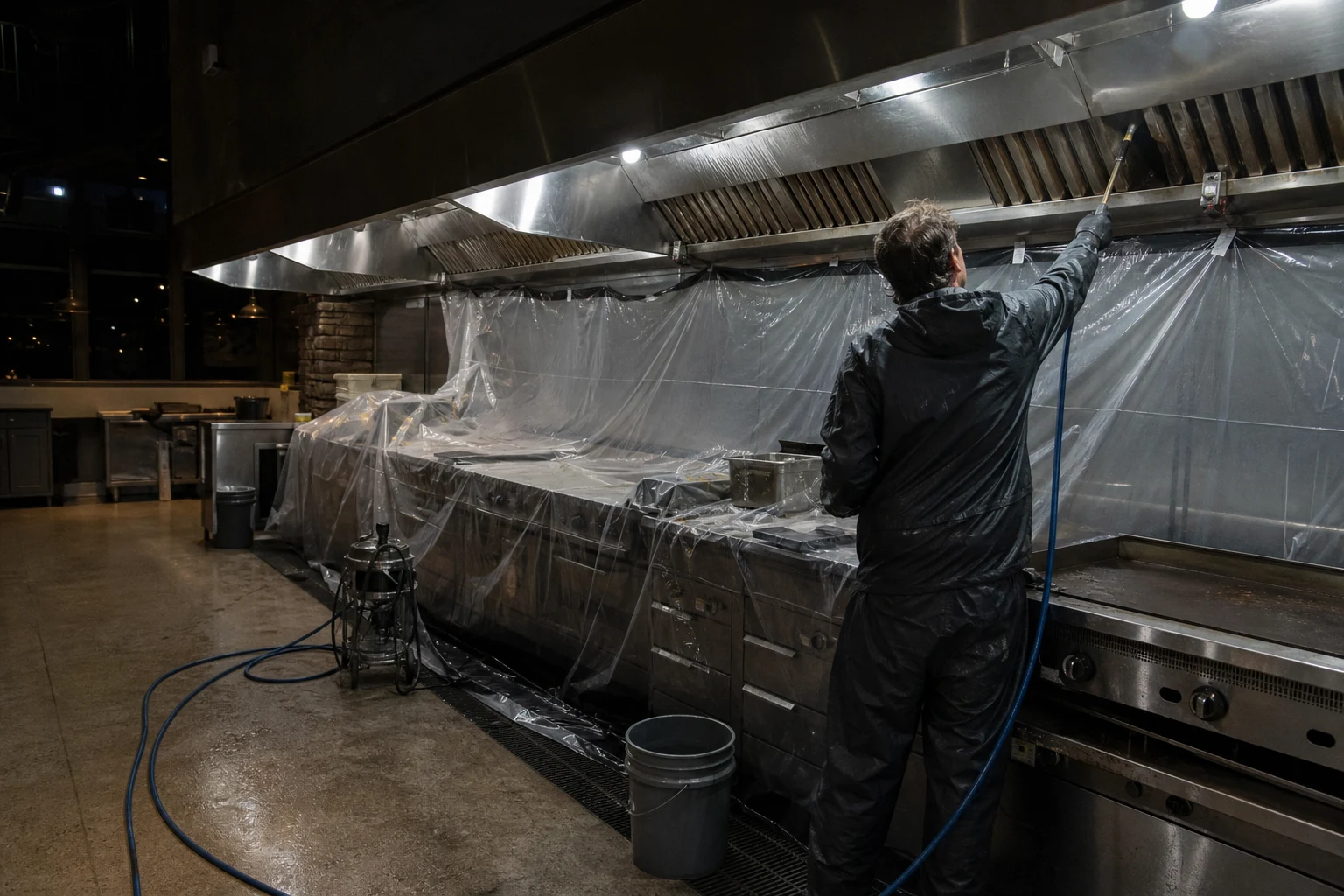
Complete system
Hood-to-fan cleaning
Identify and clean the agreed accessible canopy, plenum, duct and fan components.
Explore this service →Commercial kitchen exhaust help in Bend, Oregon
Scope hood-to-fan grease removal, protect the kitchen and roof, and build service records that make sense to managers, insurers and inspectors.
What can we help with?
Commercial exhaust services
System count, fuel, grease load, access, roof conditions and the shutdown window matter more than a generic square-foot price.
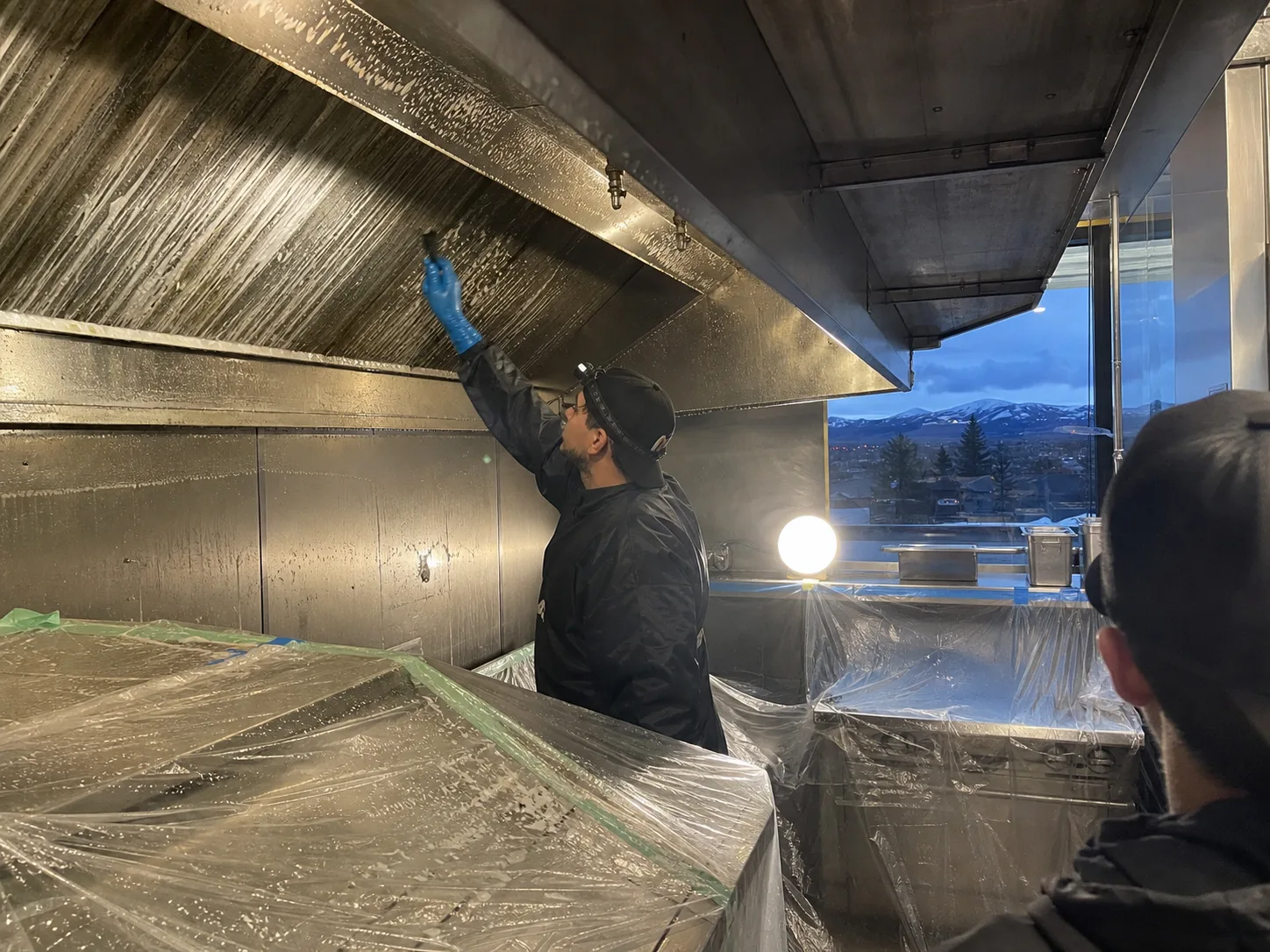
Complete system
Identify and clean the agreed accessible canopy, plenum, duct and fan components.
Explore this service →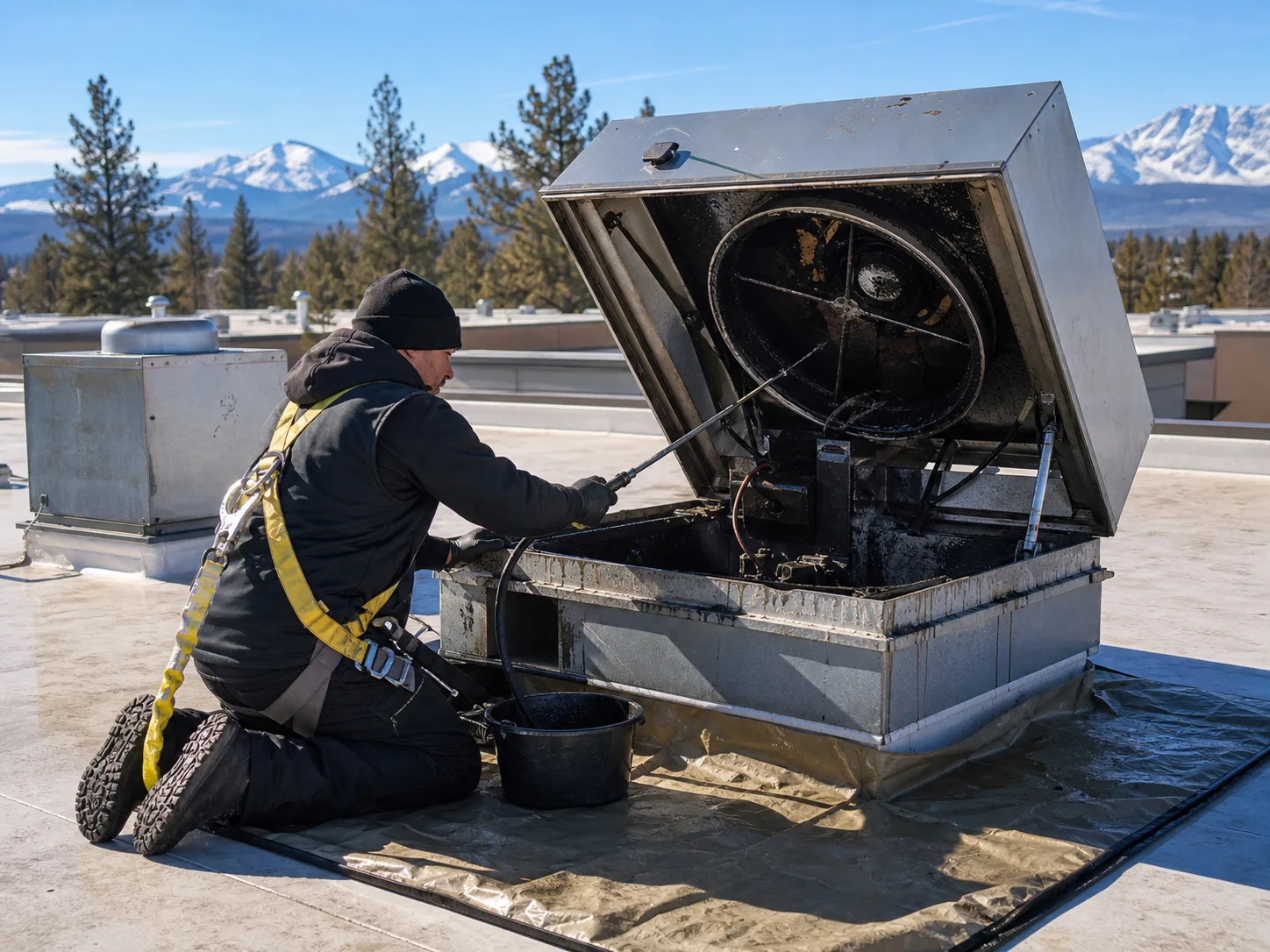
Beyond the canopy
Plan safe access, fan lifting, grease containment and roof protection before service begins.
Explore this service →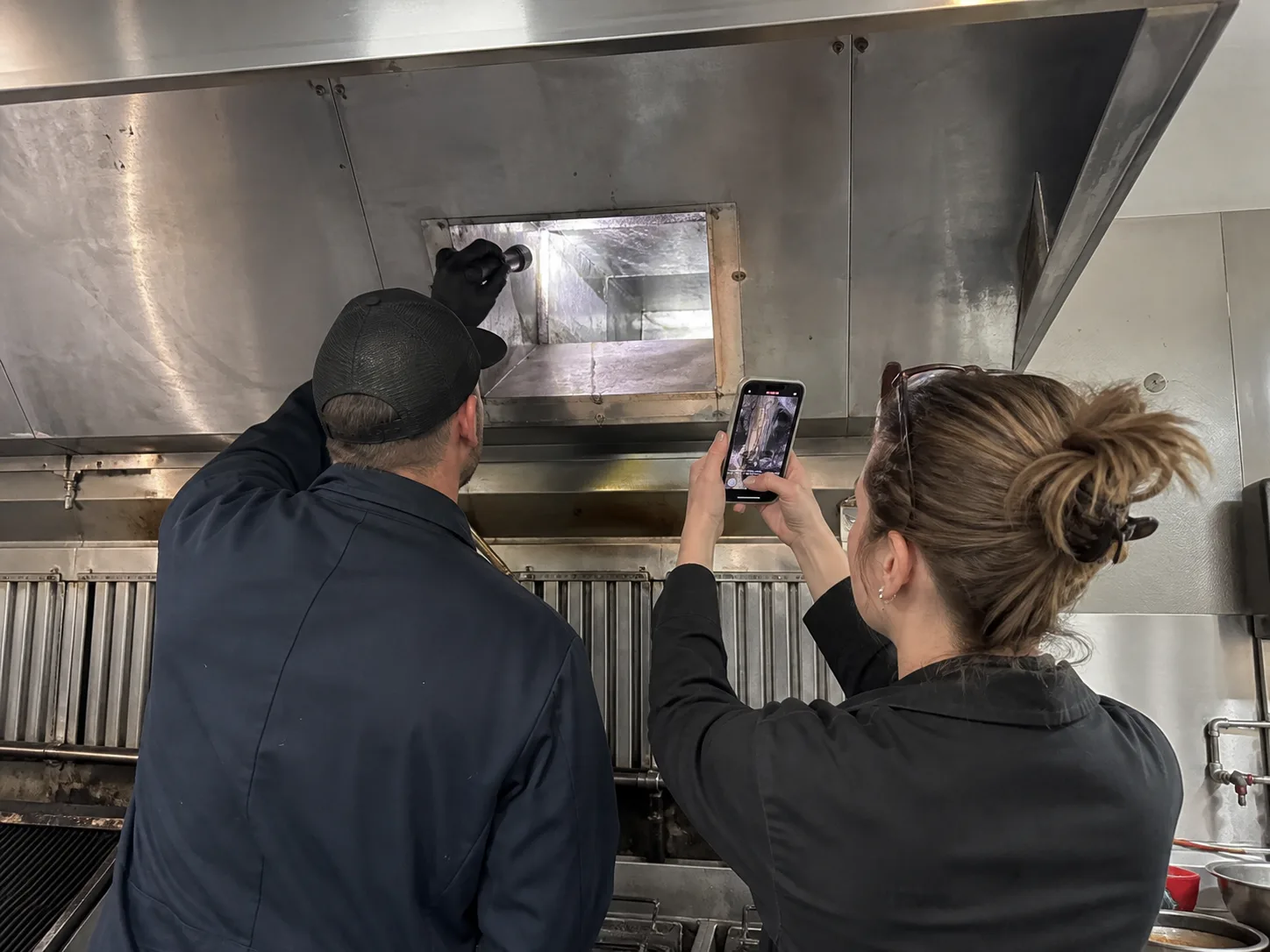
Records + condition
Organize labels, photographs, prior reports and open deficiencies for each exhaust system.
Explore this service →Bend fire-code context
Oregon State Fire Marshal guidance distinguishes qualified inspection from cleaning: inspection establishes whether grease accumulation presents a hazard, while service records identify what was inspected and cleaned. Bend Fire & Rescue follows the current Oregon Fire Code and local requirements.
Useful details before the first visit
Count every system.List hood, fan, duct route and solid-fuel equipment by location.
Describe the roof.Share access method, roofing sensitivity and seasonal conditions.
Set the closeout standard.Require location-tagged photographs, labels and deficiency notes.
A practical starting point
| What you notice | Possible approach | What still needs inspection |
|---|---|---|
| Routine recurring grease service | Full hood-to-fan cleaning | Buildup, access, fan and protection |
| Fan, curb or hidden-duct concern | Duct and fan scope | Hinges, wiring, panels and roof condition |
| Upcoming fire inspection | Cleaning plus records review | Labels, reports and unresolved conditions |
| Several or remote locations | Route-based service plan | Travel, shutdown window and system inventory |
Planning comparison only. The authority having jurisdiction controls compliance for a specific facility.
How requests work
Useful project details make it easier for an independent provider to confirm fit, timing and the next sensible step.
Share systems, fuel, access, last service and buildup.
Coordinate line cooling, keys, roof access and reopening.
Compare component scope, protection, photos, exclusions and price.
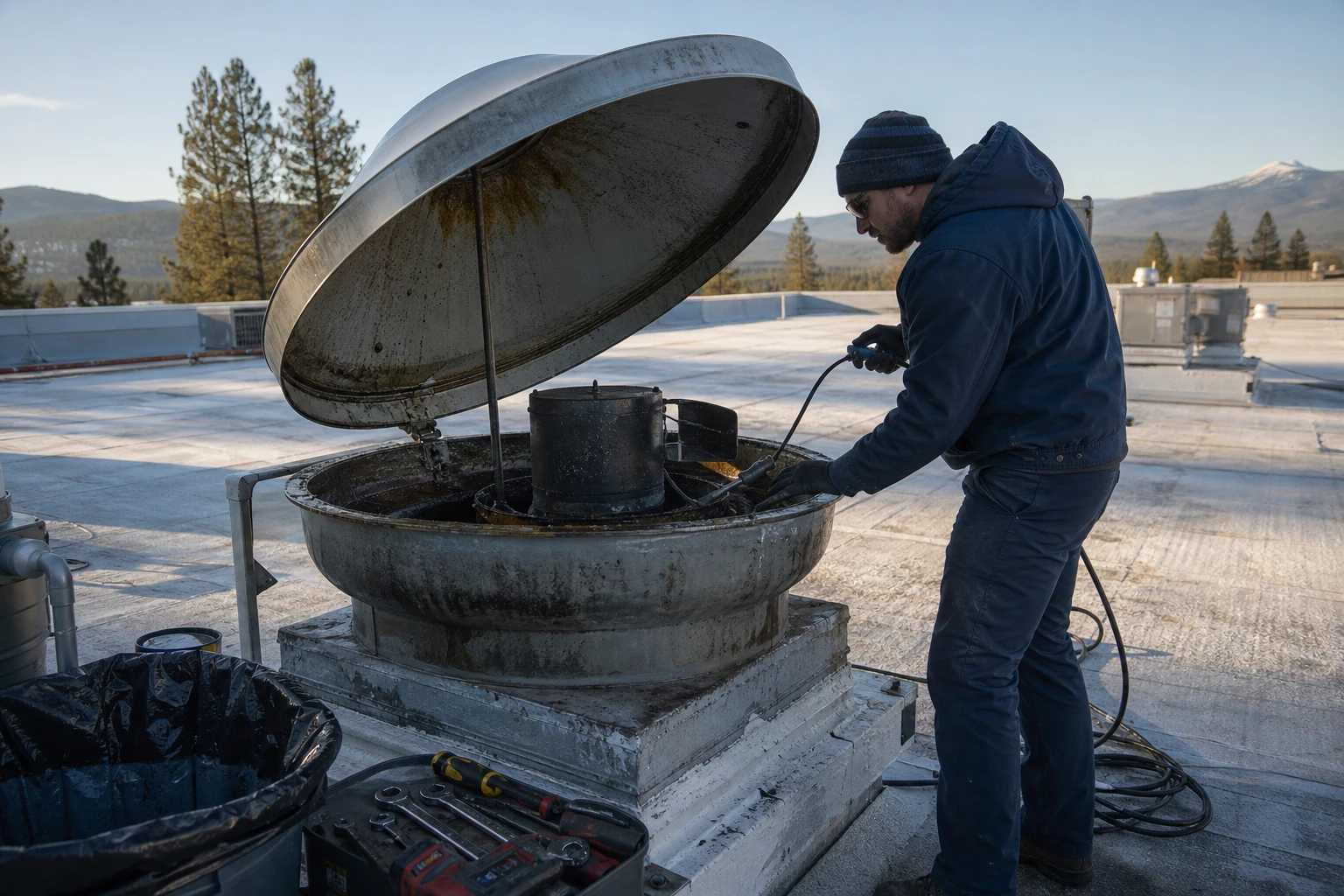
Prepare for a walkthrough
Frequently asked questions
The written scope should identify hood, plenum, accessible duct, exhaust fan, filters when included, kitchen and roof protection, cleanup, labels and photographs.
Frequency depends on fuel, menu, volume and observed grease accumulation. Qualified inspection, applicable code, insurer requirements and direction from the authority having jurisdiction should inform the interval.
Planning estimates may range from about $450–$850 for a small system, $850–$1,500 for a typical restaurant, and $1,500–$3,500+ for multiple or difficult systems. These are not bids.
No. Suppression, access, mechanical, electrical and other conditions may require separate work.
Request commercial service
Send the system facts and preferred work window. An independent provider can confirm Central Oregon coverage, qualifications, scope and price.